How to Build an In-Ear Monitor Mix That Helps You Lead Worship
It’s Not Getting Better. It’s Just Getting Louder
If you've ever finished worship rehearsal thinking, "I just can't hear myself," you're not alone. Almost every worship leader I've worked with has fought their in-ear mix at some point. The natural response is to turn yourself up. Then the guitar player turns themselves up. Then the keys player. Then the tracks. Before long, everyone is listening to a louder version of the same muddy mix. Here's the truth, the problem usually isn't volume. It's frequency competition. Let's break down why this happens and how to build an in-ear monitor mix that actually helps you lead worship.
Why Your In-Ear Mix Shouldn't Sound Like the Album
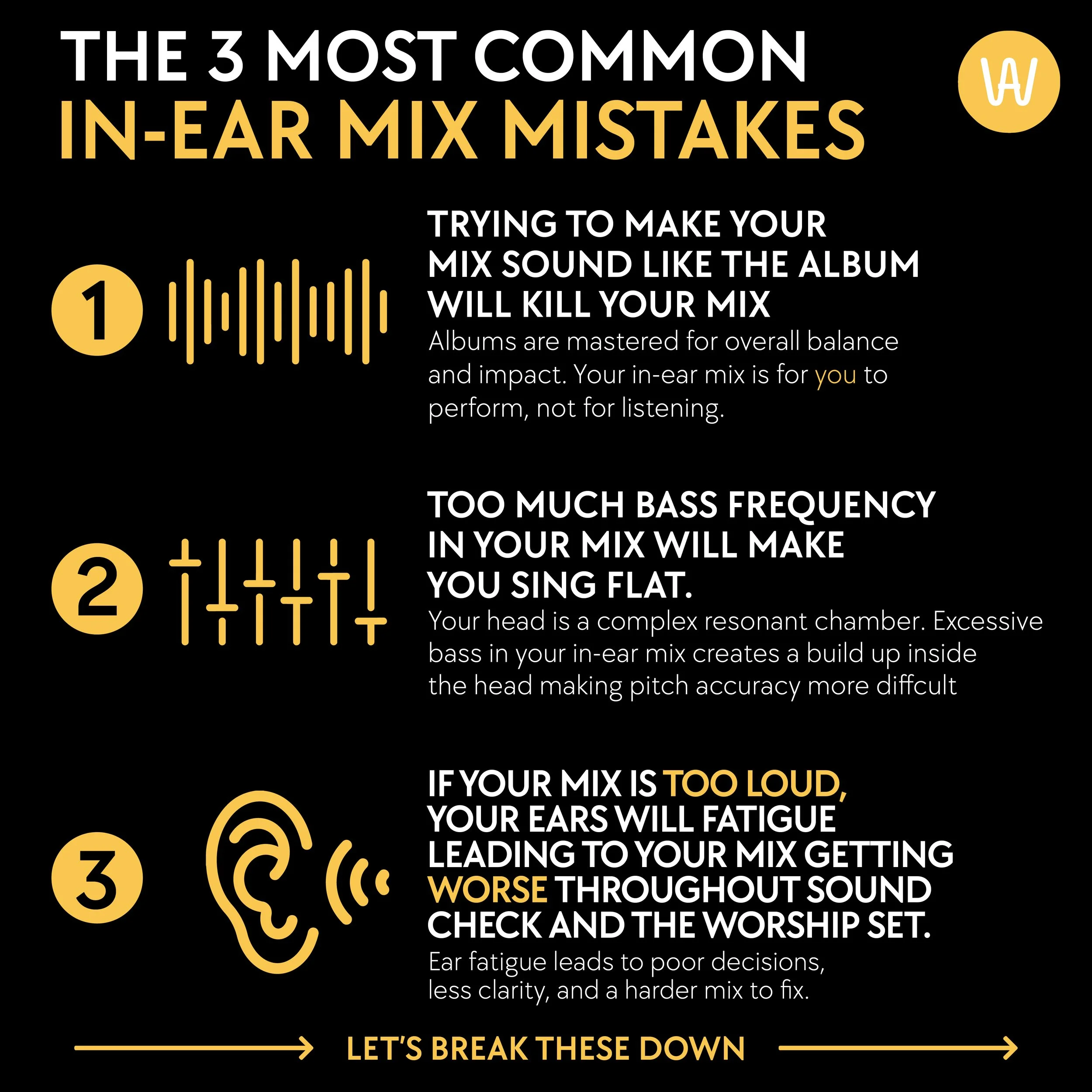
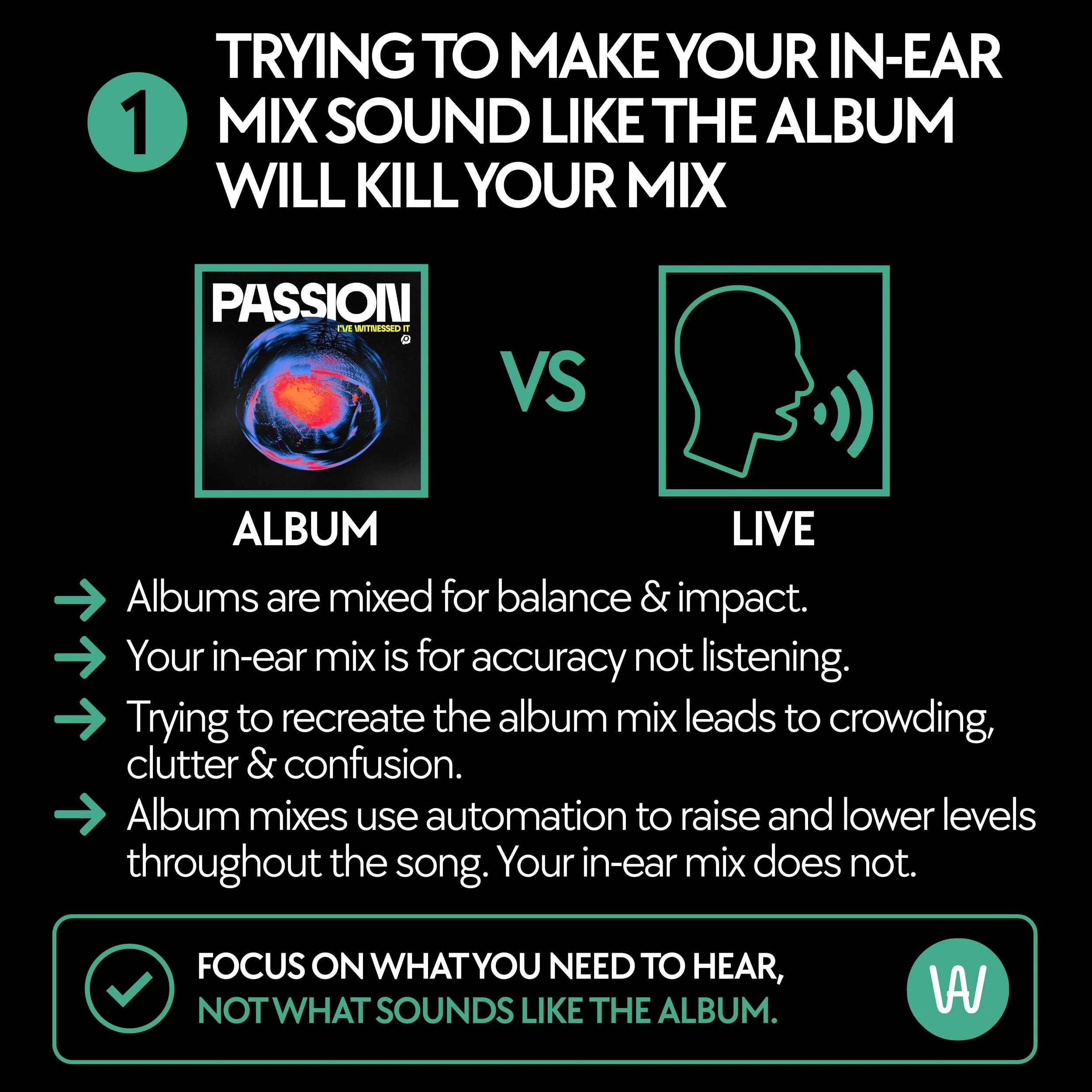
One of the biggest mistakes worship teams make is trying to recreate the sound of Spotify inside their ears. That sounds logical until you realize an album and an in-ear mix have completely different jobs. An album is mixed to sound incredible for the listener. Your in-ear mix is designed to help you be accurate and execute. Professional albums use automation, compression, EQ, volume rides, stereo imaging, and mastering. Every instrument is constantly changing throughout the song. Your in-ear mix isn't. Trying to recreate that polished album experience usually leads to adding more instruments than you actually need, which creates clutter instead of clarity.
How to Create a Good In-Ear Monitor Mix
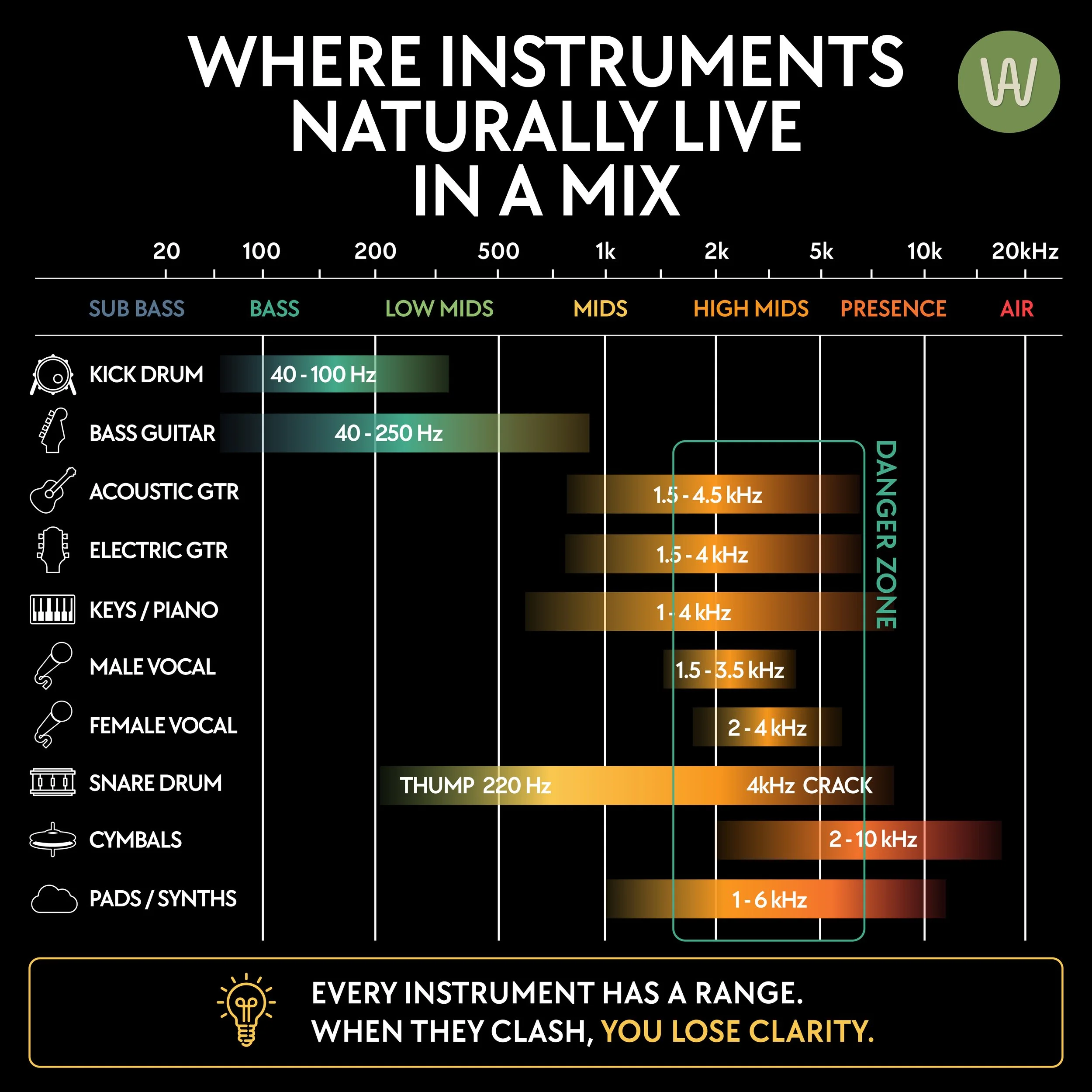
Instead of asking, "What sounds good?" start asking, "What helps me lead?" Those are two completely different questions, and the answers will change the way you see in-ear monitors. I always recommend starting with your own voice or instrument. If you're leading worship, your vocal should be the clearest thing in your ears. If you're playing guitar while leading, your guitar should support your voice—not compete with it. From there, add the elements that help you stay in time. For most people that's the kick drum, snare, bass guitar, and click track if your team uses one. These provide the rhythmic foundation without overwhelming your mix. Finally, begin adding only the instruments you actually need. This is where many in-ear mixes begin to fall apart. Every instrument naturally occupies a frequency range, and several of them overlap almost perfectly with your vocal. Acoustic guitar, electric guitar, piano, pads, and background vocals all live in the same upper-midrange frequencies where vocal clarity exists. When too many instruments occupy the same space, your brain struggles to separate them. The natural reaction is to keep turning yourself up. Instead of hearing yourself, you’ve just made the problem louder.
Why Can't I Hear Myself in My In-Ear Monitors?
Whether you're a male or female worship leader, the same instruments tend to compete with your vocal the most. Acoustic guitars, electric guitars, pianos, pads, and background vocals all occupy the same frequencies that allow you to hear your own voice clearly. Interestingly, kick drum and bass guitar usually aren't the biggest problem. They primarily live in the lower frequencies and provide the foundation of the mix rather than directly competing with vocal intelligibility. Understanding this single concept can completely change the way you build an in-ear mix. Instead of adding more volume, begin creating more space. More instruments give the illusion of fullness but really they are creating a bottleneck around the same band of frequencies. If eight people try to sit at a table for four, there will be crowding and discomfort. The same thing applies with your in-ear mix. I know your buddy who plays lead guitar is up this weekend and you want to hear what he plays. Adding more of him to your mix will compete with your vocal. They occupy the same range of frequencies. The more of him you add, the more of your voice you’ll have to add and over the duration of your worship rehearsal you will just keep creating the same problem, just louder.
Why Too Much Bass Makes You Sing Flat
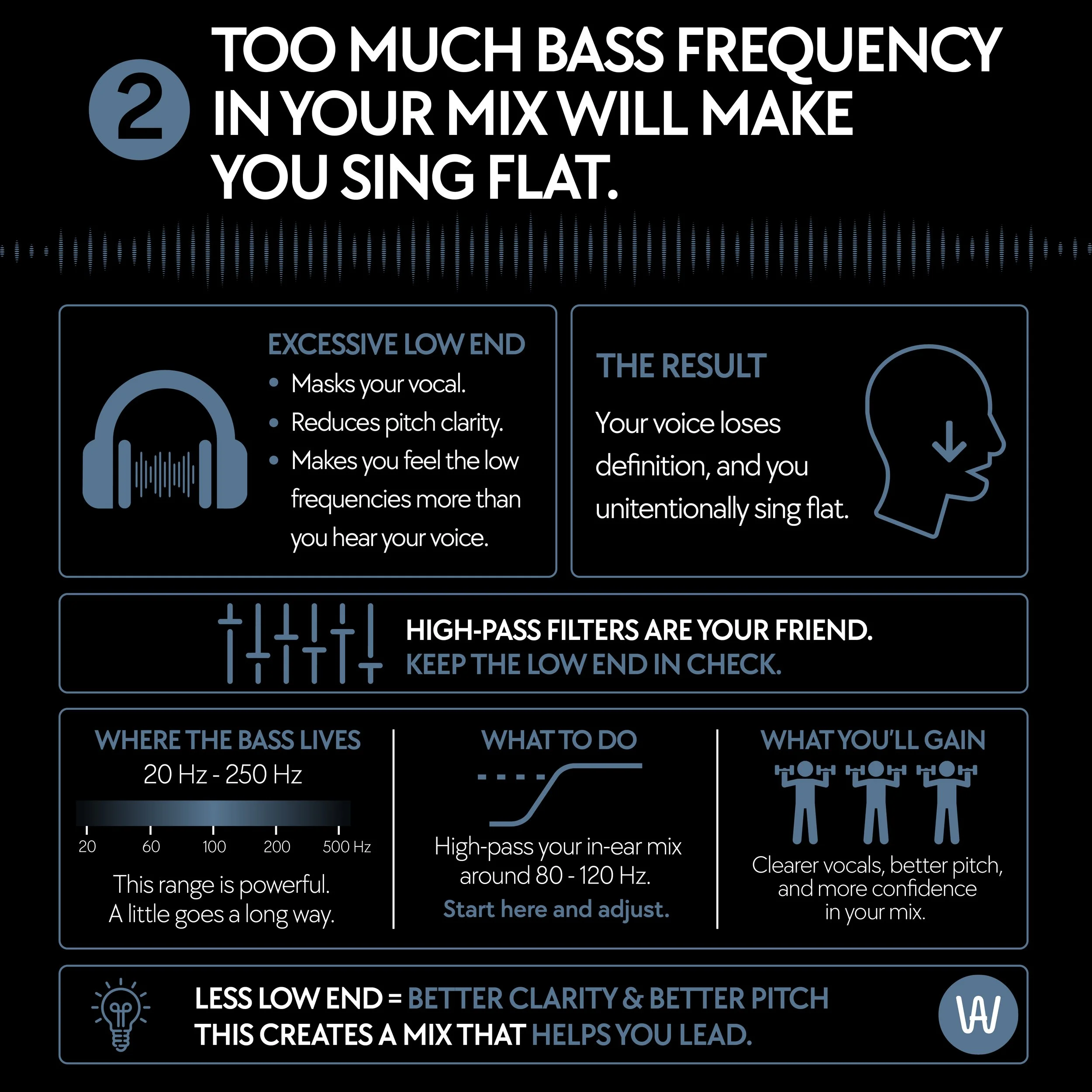
This surprises a lot of worship leaders because we naturally assume more bass equals a fuller, better mix. In reality, excessive low frequencies create resonance inside your head. Instead of clearly hearing your vocal pitch, you begin feeling the low end, which makes accurate pitch perception much more difficult. The design of the human head is like a complex resonant chamber. There are hollow pockets where low end frequencies will travel to and build up. As those low frequencies build up in the head, it becomes harder to perceive volume. It’s easy to notice a small adjustment in volume with things like electric guitar and piano because of there frequency range. Bass frequencies are much harder to perceive. It ends up requiring more volume to hear them, creating a louder and muddier mix. As you sing, your voice starts to bounce around in your head and those bass frequencies can overwhelm the ability to hear your voice. In my Instagram post, I explain that excessive bass masks your vocal and reduces pitch clarity, often causing singers to unintentionally sing flat. For many worship leaders, rolling off unnecessary low frequencies around 80–120 Hz is an excellent place to start. Less low end usually results in clearer vocals, better pitch, less fatigue, and greater confidence.
Why Loud In-Ear Mixes Get Worse Over Time
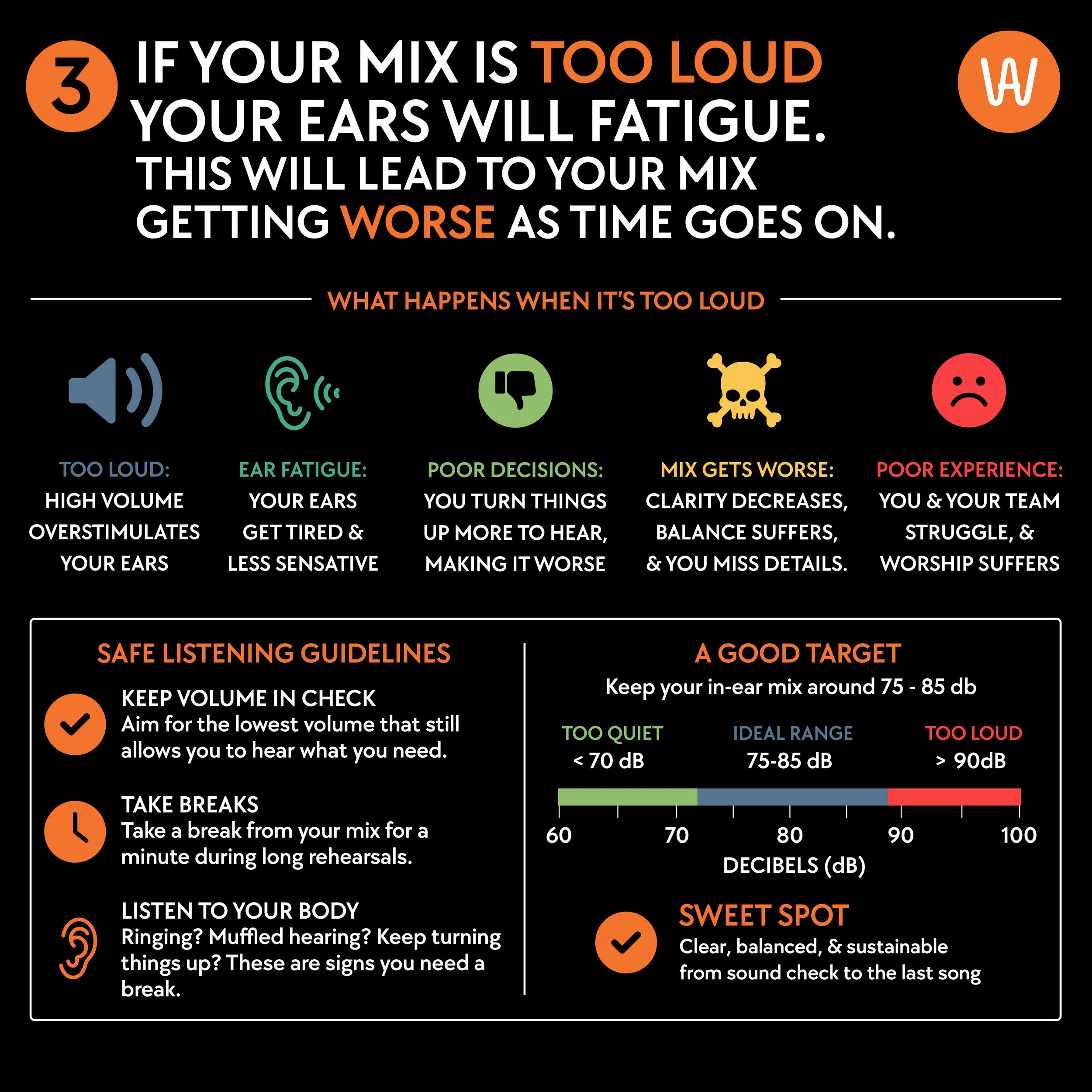
Have you ever noticed that your mix sounds great at the beginning of rehearsal but terrible by the end? Most people assume something changed on the console. Usually, nothing changed except your ears. As your ears become fatigued, they temporarily lose sensitivity. That causes you to make poor mixing decisions. You turn yourself up, then another instrument, then another, until your mix becomes increasingly cluttered.
Too Loud → Ear Fatigue → Poor Decisions → Worse Mix → Worse Worship Experience.
Keeping your volume as low as possible while still hearing what you need, taking occasional breaks during long rehearsals, and paying attention to ringing ears or muffled hearing will help you maintain a consistent mix from sound check through the final song. Back to my point from above. The congestion that happens with electric guitars, keys, vocals and acoustic guitars will dull your hearing. The natural thing people will do is turn the volume up or add treble to compensate. These frequencies are BRUTAL on your ears. Imagine taking a sharp knife and lightly rubbing it on a stone. Once or twice won’t cause any damage but if you do it repeatedly, you will dull the blade. You are doing the same thing to your ears when you have too many elements that are all in the same frequency range in your in-ear mix.
The Secret to Singing on Pitch
Most worship leaders assume singing on pitch is simply about vocal ability. While good technique certainly matters, what you hear in your ears plays a huge role in pitch accuracy. Pitch improves when you can clearly hear your own voice, the harmonic center provided by the keys or guitar, the bass guitar, and the groove created by the rhythm section. Pitch becomes much more difficult when you're fighting excessive bass, loud cymbals, multiple guitars, overpowering background vocals, or an overcrowded mix. The cleaner your mix becomes, the easier it becomes to sing confidently and accurately. Adjusting your mix to hear yourself better will take some adjusting but the pay off is immense.
What Should Be in a Worship Leader's In-Ear Mix?
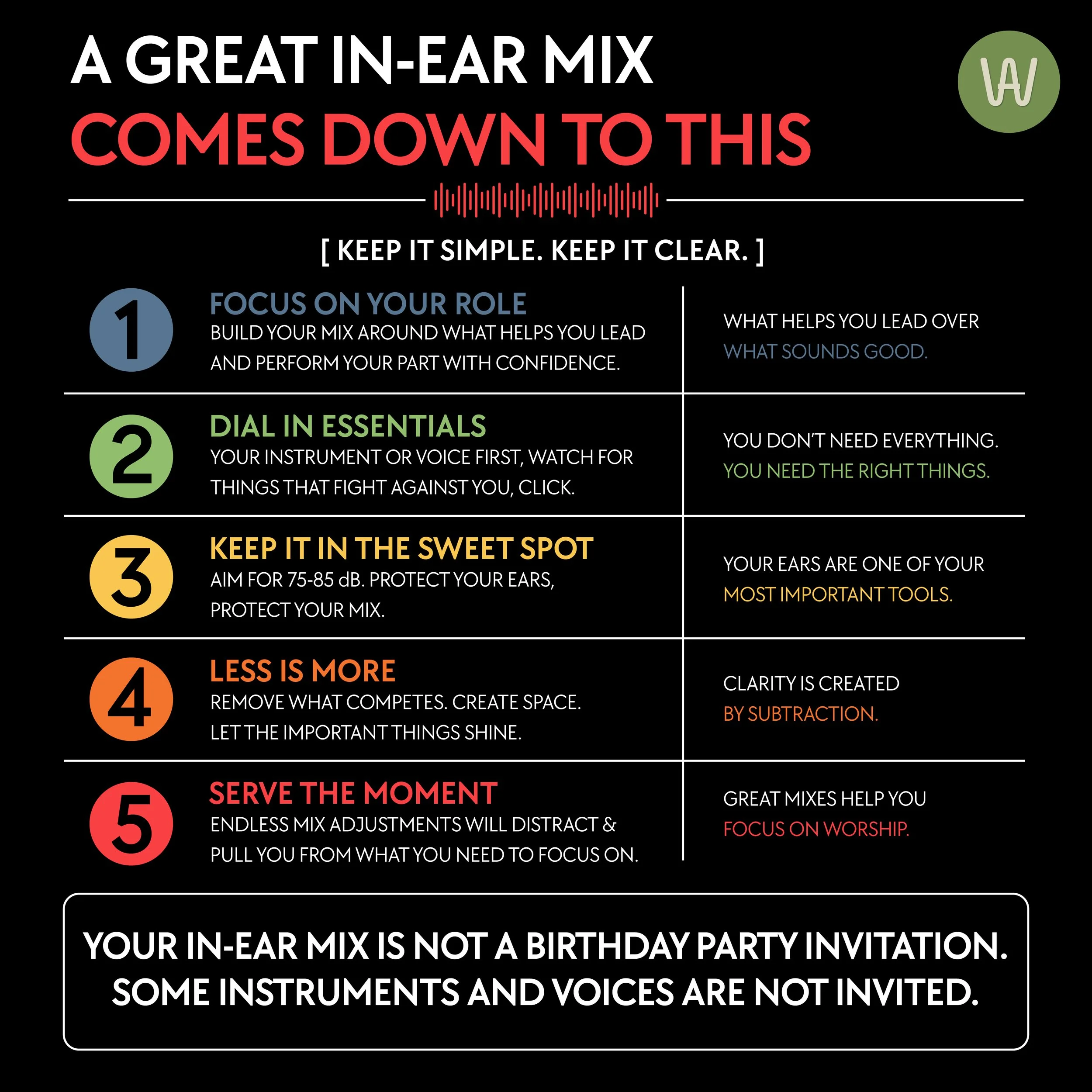
"Your in-ear mix is not a birthday party invitation. Some instruments and voices are not invited."
Great in-ear mixes aren't about hearing everything. They're about hearing the right things. If your mix helps you stay on pitch, stay in time, lead confidently, and hear your role clearly, you've already accomplished its purpose. Because your in-ear mix isn't for the audience. It's for you to lead worship well. Start with a good amount of your voice or instrument, then add in a time keeping element at about half the volume of your voice or instrument. This could be the click or the drums or both. Then slowly start to dial in the instrument that helps you hear the fundamental notes of the key you are singing in. This could be the piano or acoustic guitar. Take your time with this. Both of these instruments can compete with the natural frequency of your voice. Listen to me, don’t panic. This mix is going to sound empty at first. You have been cramming every instrument into your mix for years and this is going to feel like you are going backwards, but trust me. In very small doses, add an additional element from the band. The key here, go slow. With so few elements in your mix, you are going to notice them more at lower levels and thats the point. Lead a song with this mix and focus on hearing yourself clearly, then add volume or elements to taste.
Final Thought
The best worship leaders I know don't necessarily have the most expensive in-ear systems or a stellar sounding mix. They simply understand one principle:
Your ears don't need more sound. They need more space.
When you stop chasing the album mix and start building your mix around clarity, you'll spend less time asking your engineer to "turn me up" and more time focusing on what actually matters—leading people in worship.
For a more visual approach to this post, check out my Instagram post HERE